389 | Vetting Investors as Much as They Vet You with Lauren Howard
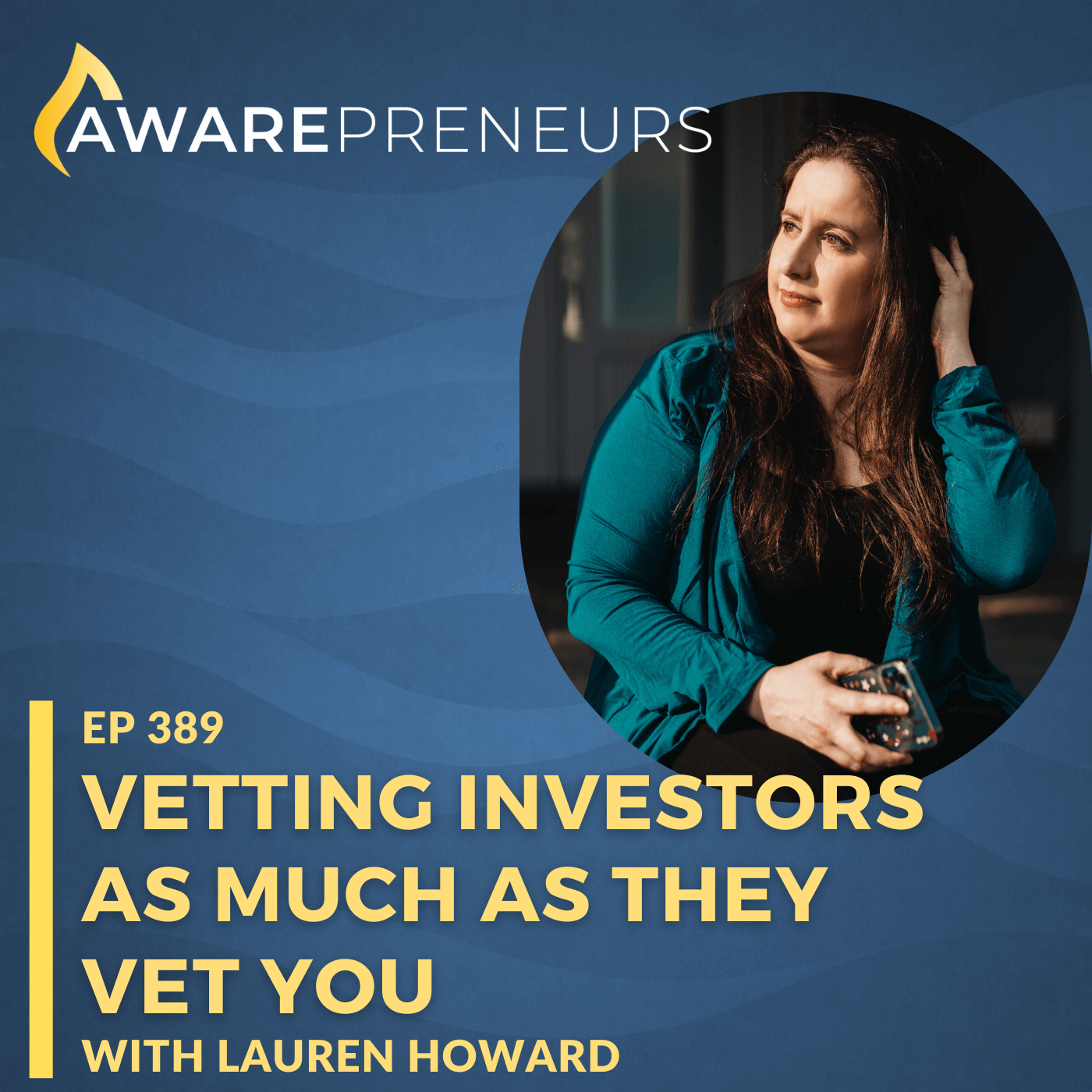
What if the key to building a thriving, mission-driven company was not just finding the right investors—but learning to vet them as thoroughly as they vet you?
Bio: Lauren “L2” Howard is a telehealth program operator, mental health advocate, and women’s champion who believes, above all, that isolation lies—it’s not just you, and help is available. She is the CEO of LBee Health, a virtual mental health treatment program that supports people recovering from burnout, toxic work environments, and trauma, while also providing full-spectrum mental health care with an emphasis on accessibility and lower-cost options. Lauren is also the CEO of ElleTwo, a digital platform and community boldly calling BS on outdated ideas of “professionalism” for women and inviting them to join #teamdifficult as they redefine what leadership and success can look like. Across her companies and consulting work, L2 uses technology, storytelling, and care to build spaces where people can heal, tell the truth about what they’re going through, and do work that feels more human and sustainable.
This episode is sponsored by the coaching company of the host, Paul Zelizer. Consider a Strategy Session if you can use support growing your impact business.
Resources mentioned in this episode include:
Transcript of Vetting Investors as Much as They Vet You with Lauren Howard
NOTE: While it’s not perfect, we offer this transcript and the below summaries by Castmagic for those who are hearing impaired or who don’t find listening to a podcast enjoyable or possible.
Click here for full transcript.
Key Takeaways in Vetting Investors as Much as They Vet You with Lauren Howard
1. Isolation Lies: Building Community is Essential for Mental Health and Work Culture
Lauren Howard emphasizes that one of the core insights from her personal and professional journey is that isolation is not only painful, but designed to keep people silent, disconnected, and believing their struggles are unique. Breaking isolation and building community is foundational for healing and cultural change in workplaces, especially for women and neurodivergent individuals.
"If you think you can't reach out, if you think you can't ask for help because you're the only one, isolation lies. It tells you it's just you, and it is almost never just you."
2. Innovating in Mental Health: Accessibility, Affordability, and Addressing Workplace Trauma
LB Health was created to fill a gap in mental health care by directly addressing the intersection of burnout, toxic work environments, neurodivergence, and accessible care. Their approach prioritizes affordable, insurance-reimbursable services and support groups, serving people who are often under-supported by both the healthcare system and traditional work structures.
“We have programs that literally only exist within our practice because we built them using incredible, really exceptional clinicians who built innovative programs that work within the evidence space, but still kind of push the boundaries of what we traditionally see... And we try to do it as affordably as possible, because people who can afford to pay $400 an hour to talk to a psychiatrist are not looking for somebody like me. They're good. They have care.”
3. Values-Driven Scaling: Vetting Investors as Much as They Vet You
As Lauren Howard considers scaling LB Health and L2 with outside investment, she highlights the importance of staying true to core values and mission, refusing to dilute the organization’s purpose for capital, and making sure potential investors are as aligned with the mission as the founding team and employees.
"We can't be someone we're not in order to secure funding... There is this aspect of vetting our investors as hard as they're vetting us and not just taking every dollar that's offered to us across the board... Our company doesn't exist without our story. And we have to be able to tell it. And if we can't tell it, then there's no value to the money."