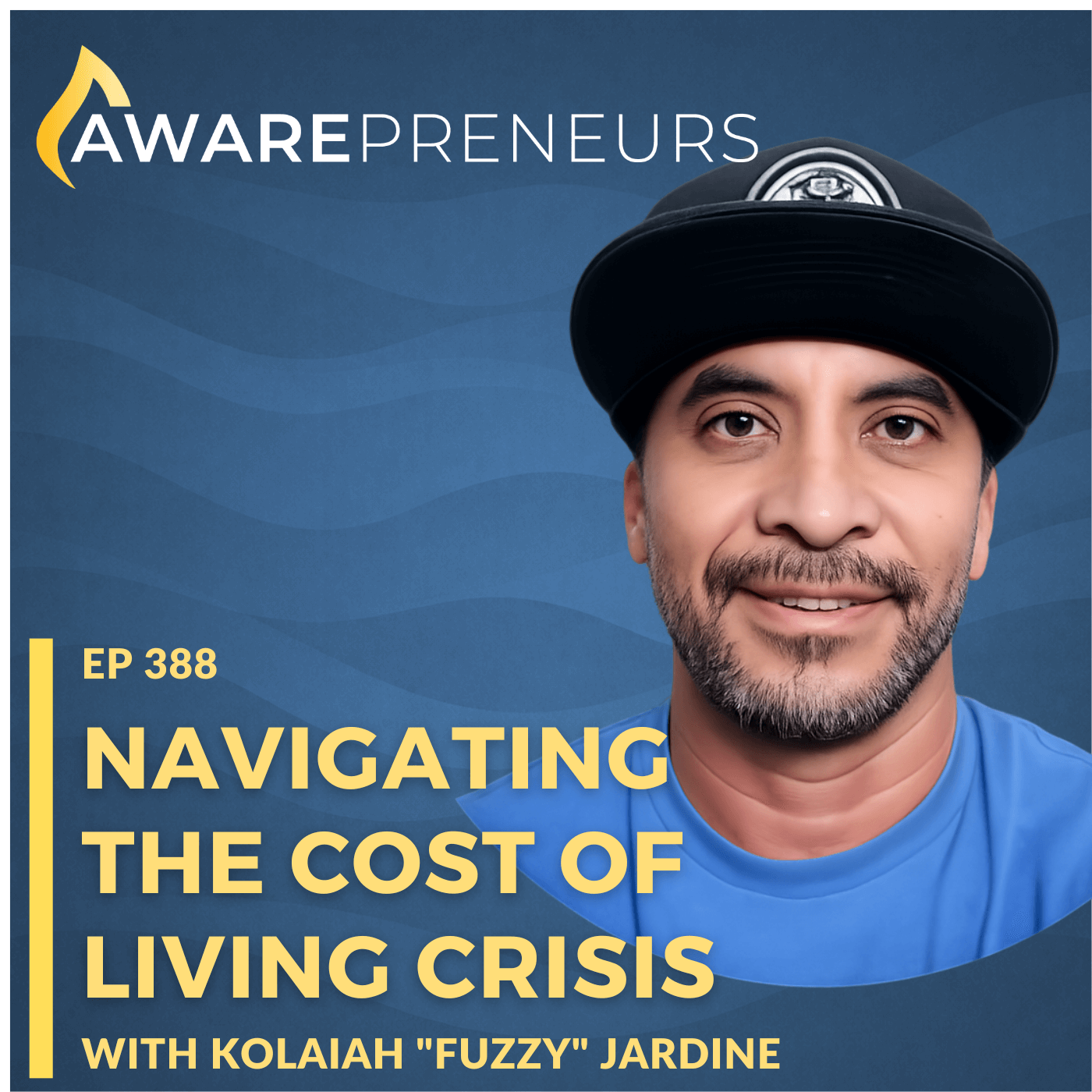
388 | Navigating the Cost of Living Crisis with Fuzzy Jardine
What if the key to thriving amidst an ongoing cost of living crisis was hidden in creative collaboration and a fresh perspective on wealth?
Bio: Kolaiah “Fuzzy” Jardine, co-founder of HUI Mastermind, empowers Native Hawaiians and locals to build generational wealth through real estate in their homeland, the Pono Way. A former drug addict and dealer who spent time in federal prison, Fuzzy built a multi-million dollar real estate portfolio, including 100+ affordable homes and a $6 million rental portfolio. He uniquely teaches investing using Other People's Money and Time (OPM/OPT), making complex strategies accessible.
Fuzzy’s journey began from growing up with nothing, leading to addiction, drug dealing, and federal prison. His pivotal turning point came during incarceration, igniting his pursuit of real estate investing as a path to freedom and legacy.
Through his unique experiences, Fuzzy developed the step-by-step HUI Framework to help aspiring investors ethically succeed in Hawaii's challenging market, proving that anyone can change their financial destiny.
This episode is sponsored by the coaching company of the host, Paul Zelizer. Consider a Strategy Session if you can use support growing your impact business.
Resources mentioned in this episode include:
Transcript of Navigating the Cost of Living Crisis with Fuzzy Jardine
NOTE: While it’s not perfect, we offer this transcript and the below summaries by Castmagic for those who are hearing impaired or who don’t find listening to a podcast enjoyable or possible.
Click here for full transcript.
Key Takeaways in Navigating the Cost of Living Crisis with Fuzzy Jardine
1. Personal Transformation Enables New Paths to Wealth and Purpose
Kaliah Fuzzy Jardine illustrates that even from the most challenging beginnings—including addiction, incarceration, and poverty—individuals can pivot toward building personal wealth and serving their community. His journey from struggling youth to real estate investor underscores the possibility of deep personal change and the acquisition of new skills regardless of past mistakes.
“Even if you do make mistakes, you know, we go down the wrong path but choose to change to become a better person. … If you put your mind to it, you have really, really burning, really burning. Why in your life or a really solid, you can see the goal or, or dream that you have and not let anybody stop you. You can accomplish it.”
2. Building Generational Wealth Creatively and Ethically—The Pono Way
Fuzzy’s approach centers on making real estate accessible through creative financing (“other people’s money”), a hyper-local mindset, and putting ethical business practices at the forefront. He demonstrates that by truly knowing your community, creatively leveraging resources, and prioritizing ethical partnerships, anyone can contribute to generational wealth for those often left out of traditional markets.
"All of this that I'm doing today was off of borrowed money, other people's money... and we, a lot of us think that we need the money to do stuff which we really know in a way. Yes, but we don't. You just got to be creative ... and I'm in a way better place than I was ... I'm blessed to be alive today because ... I think God kept me here for a reason to, to tell my story."
3. Local-Led Community Solutions are Key to Affordable Housing Crisis
Rather than accepting prevailing narratives about unaffordable real estate markets, Fuzzy champions local solutions—building affordable homes by leveraging community knowledge, relationships, and shared ownership structures (“hui”). He underscores that collective action, cultural respect, and focusing on providing value together can protect and empower native and long-time residents, even amid market pressures.
"I would go to aloha, right? I mean love and work together. Together. Like, and that's what hui mean. Hui whoi is a community of like minded individuals or people that, you know, work in a group to help each other. … A community is huge and working together. … Try to think of how you can help your brother or sister first, you know, and how you guys can help that community. Because we see outsiders coming in with money and it doesn't only happen in Hawaii. Like, it's everywhere, right?"
These three takeaways reveal not just a roadmap for individual reinvention or real estate investment, but a blueprint for how communities can come together to address the cost of living crisis—rooted in ethics, creativity, and shared responsibility.