396 | From Lean Startup to Incorruptible Social Enterprises with Eric Ries
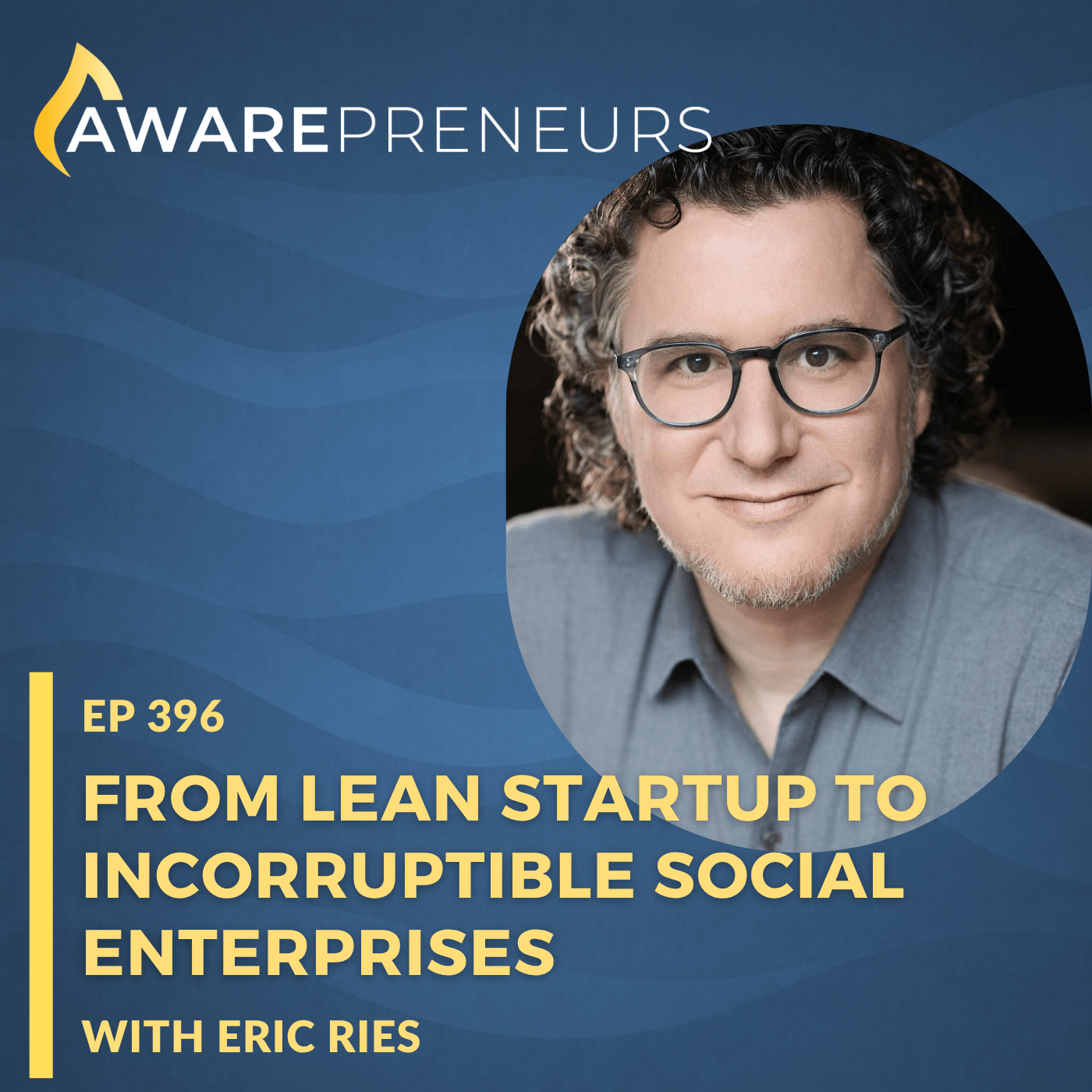
Over the last two decades, Eric Ries’s ideas about continuous innovation, long-term thinking, governance, and market reform have reshaped company building and management practices. He is the creator of the Lean Startup method, and the author of the New York Times bestseller The Lean Startup; The Leader’s Guide; and The Startup Way.
As a founder, he has put his own ideas into practice with The Long-Term Stock Exchange (LTSE); Answer.AI, an AI R&D lab; the Lean Startup Co, which teaches and supports the implementation of Lean Startup; Virgil, a legal services startup; and IMVU, where the ideas that became the Lean Startup method were forged. On his podcast, The Eric Ries Show, he talks to guests including world-class technologists, thought leaders, and executives working to build profitable companies for the long-term benefit of society. Eric has served as an entrepreneur-in-residence at Harvard Business School and IDEO. He lives in the San Francisco Bay Area with his wife and three children.
This episode is sponsored by the coaching company of the host, Paul Zelizer. Consider a Strategy Session if you can use support growing your impact business.
Resources mentioned in this episode include:
Transcript of From Lean Startup to Incorruptible Social Enterprises with Eric Ries
NOTE: While it’s not perfect, we offer this transcript and the below summaries by Castmagic for those who are hearing impaired or who don’t find listening to a podcast enjoyable or possible.
Click here for full transcript.
Key Takeaways in From Lean Startup to Incorruptible Social Enterprises with Eric Ries
The Systemic Vulnerability of Mission-Driven Startups
1) The Systemic Vulnerability of Mission-Driven Startups
Despite best intentions, founders of mission-driven startups are often unprepared for the systemic pressures that undermine their original vision, resulting in a shockingly high percentage being removed from their own companies—even when successful.
"We teach people that success will protect them... The more successful a company is, the more trustworthy it is, the more valuable it is as a target. So the more gold in the goose, the greater the temptation to steal it, to butcher it. And it's like so obvious. Once you say that out, you're like, oh, of course." 08:16
2) Structural Solutions Over Surface-Level Fixes
Enduring, mission-aligned companies require deeper, structural design choices—like Public Benefit Corporation status and a Director’s Oath—rather than relying solely on culture, strategy, or founder charisma.
"The book is about the deeper underlying forces that act on the organization whether we want them to or not... The good news is that for each of the problems that prevent institutional longevity, there's a well known solution. And by stitching these solutions together, we can solve the two halves of the problem." 13:33
3) Trustworthiness as an Underrated Core Asset
Trust, built through consistent, principle-based action—even when seemingly “ROI-negative”—is a foundational asset for company longevity, stakeholder loyalty, and real positive impact.
"The most trust building activities tend to be ROI negative by definition. So what we have to do if we want to learn to build trust is to build a management system that makes trust an explicit goal, that finds ways to make it legible and gives people clear guidelines for behavior." 33:07