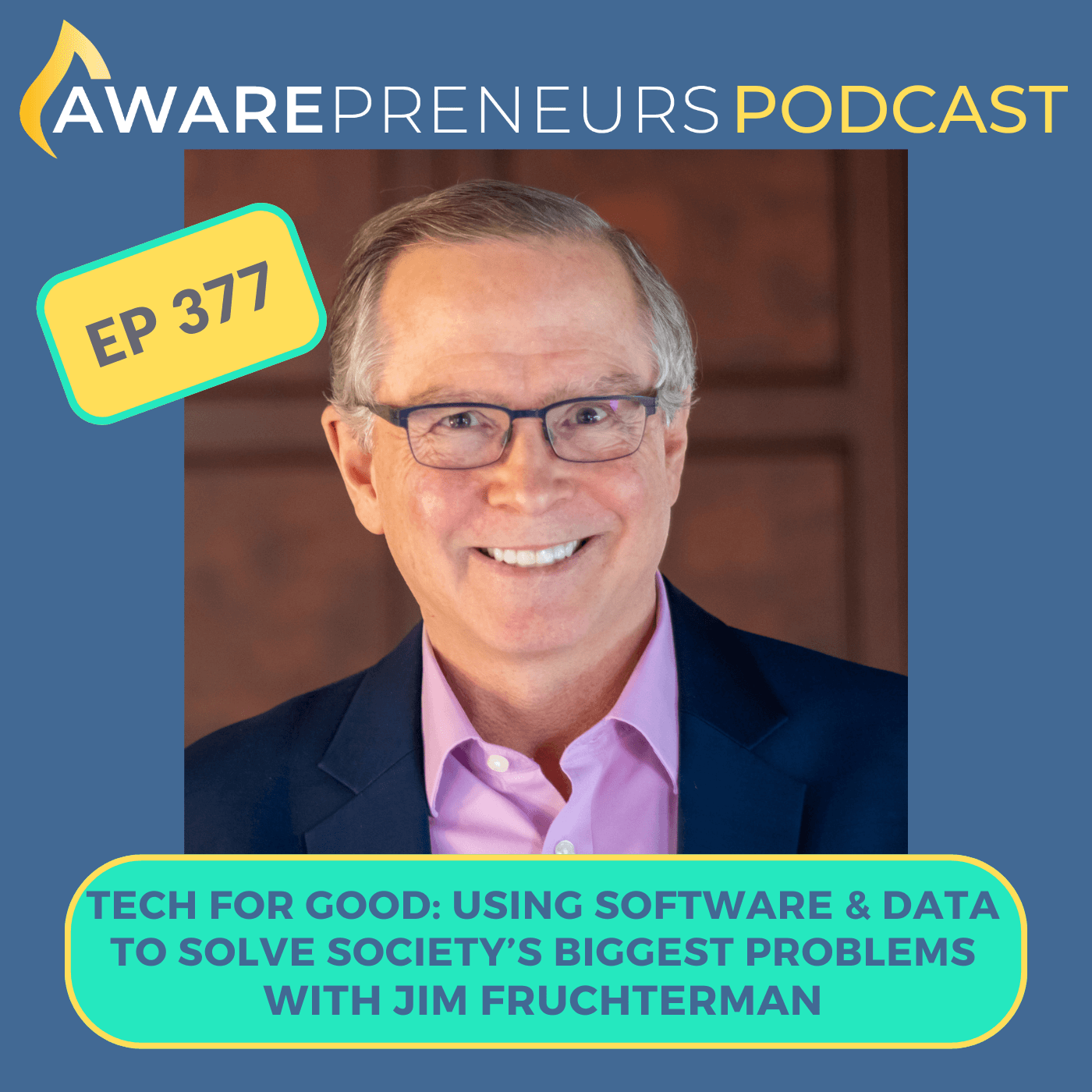
377 | Tech for Good: Using Software & Data to Solve Society’s Biggest Problems with Jim Fruchterman
What if the key to unlocking real, scalable social impact wasn’t a flashy new technology—but a smarter, more human-centered way to build and launch tech for good?
These are just a few of the provocative questions we explored with Jim Fruchterman on the latest Awarepreneurs podcast episode, hosted by Paul Zelizer.
BIO: Jim Fruchterman is a leading social entrepreneur, author, MacArthur Fellow, recipient of the Skoll Award for Social Entrepreneurship, and Distinguished Alumnus of Caltech. After starting two successful for-profit AI companies, he went on to found Benetech, the award-winning tech nonprofit, building tools for people with disabilities and human rights defenders document and analyze abuses.
His current nonprofit projects at Tech Matters include Aselo, a shared modern contact center for the crisis response field; Terraso, software for the people on the front line of the climate crisis; and the Better Deal for Data, a data governance reform movement.
This episode is sponsored by the coaching company of the host, Paul Zelizer. Consider a Strategy Session if you can use support growing your impact business.
Resources mentioned in this episode include:
Transcript of Tech for Good Interview with Jim Fruchterman
NOTE: While it’s not perfect, we offer this transcript and the below summaries by Castmagic for those who are hearing impaired or who don’t find listening to a podcast enjoyable or possible.
Read the transcript of this episode here.
Key Takeaways in Tech for Good Interview with Jim Fruchterman
Here are the 3 key takeaways from the Awarepreneurs episode featuring Josh Dorfman on Sustainability with quotes that illustrate each point.
1) Product-Market Fit is Essential for Social Impact Tech:
Successful tech-for-good ventures start by deeply understanding the real needs and priorities of their users, focusing on actual pain points rather than pushing flashy technologies or preconceived solutions. This human-centered, iterative approach is vital for developing products that people will genuinely use and value.
“The things that really do work are being very focused on product, market fit, product, user fit. Am I actually solving a problem this person has? Because if I am, they're going to want to buy my product. If I'm just telling them that they should want my product, but they don't actually internalize it at all. They won't.”
2) Nonprofit and For-Profit Tech Entrepreneurship Share Key Principles:
Building successful nonprofit tech ventures involves many of the same structures and strategies as their for-profit counterparts; both require understanding customers, iterative design, effective marketing (or outreach), and building sustainable business models. The main difference is in financial goals—nonprofits break even to maximize impact, while for-profits pursue return on investment.
“If you peel back the hood of my tech social ventures, a lot of the roles look the same as if it was in a for profit. Right. We have a head of engineering...the product manager...user experience...outreach person. That's what nonprofit sector calls marketing...And it's just what are your financial goals there? To break even at scale.”
3) Scale and Empathy via Software and Data—But With Caution:
Leaning into software and data allows social impact organizations to scale their reach and create efficiencies—freeing up human resources for what machines can’t do: empathy and nuanced problem-solving. However, it’s essential to ground these efforts in real human needs, iterate quickly, and resist hype cycles (like generative AI) until solutions are proven to help rather than harm.
“Modern software and data technology enables us to make people more powerful. If you think that’s what you’re doing with your technology, you’re on the right track...the machines will not have empathy. But if you can scale up the data that helps the humans...make them more powerful, then that insight helps them kind of scale up their empathy.”