370 | Boosting Collaborative Accountability in Impact Organizations with Dr. David Gruder
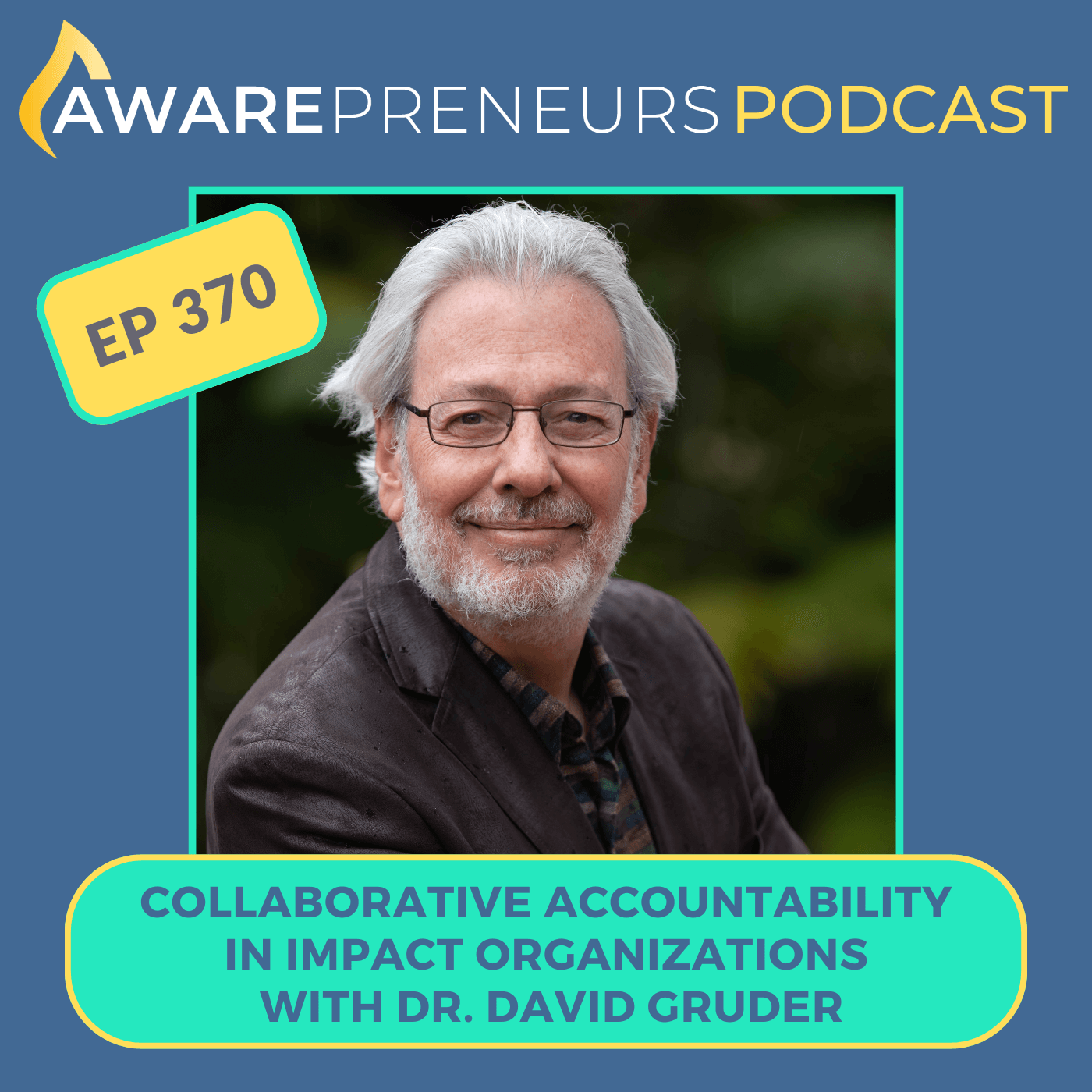
Dr. David Gruder is a Corporate Counsel who is a 12-award-winning multi-bestselling clinical and organizational psychologist. As an Executive Team Orchestrator and Culture Catalyst, he makes integrity profitable by equipping socially responsible businesses with missing mindsets, skillsets, and procedures to actualize their unique calling in helping humanity’s most elevated future emerge. As President of Integrity Culture Systems™ and director of the Center for Enlightened Self-Sovereignty™, he provides keynotes, training programs, executive consulting, writing, and media interviews. He also hosts the “Reimagining Humanity’s Future and Yours” show. His main website is DrGruder.com.
This episode is sponsored by the coaching company of the host, Paul Zelizer. Consider a Strategy Session if you can use support growing your impact business.
Resources mentioned in this episode include:
Transcript of Collaborative Accountability in Impact Organizations Interview with Dr. David Gruder
NOTE: While it’s not perfect, we offer this transcript and the below summaries by Castmagic for those who are hearing impaired or who don’t find listening to a podcast enjoyable or possible.
You can read the full transcript of this episode here
Key Topics in Interview with Collaborative Accountability in Impact Organizations Interview with Dr. David Gruder
1. Introduction and Framing of the Topic
Introduction of the host, Paul Zelizer, and the Awarepreneurs podcast mission.
Request for listeners to subscribe and review for show support.
Introduction of Dr. David Gruder: background, credentials, and current work focus.
Overview of episode topic: "Boosting Collaborative Accountability in Impact Organizations."
2. Getting to Know Dr. David Gruder – Personal Background
Insights not found in his bio: attending Woodstock, roots as a futurist.
Profound interest in the future sparked by the 1964-65 New York World's Fair.
Personal hobbies: science fiction, fantasy, and being a “recovering musician.”
Musical training: trombone and voice.
3. Defining Accountability in a Social Impact Context
Dr. Gruder’s concise definition of accountability.
Accountability as a relational process, not just individual.
Three dimensions of accountability:
Relationship accountability.
Self-accountability.
Collective accountability.
Importance of accountability in values-driven (social impact) businesses.
4. Collaborative Accountability: Introduction and Rationale
Clarifying “collaborative accountability” vs. traditional accountability.
Problems with “accountability abuse”: shame and coercion in organizations.
The essence of collaborative accountability: focusing on growth rather than blame.
Impact literacy: being aware of the impacts of one’s choices and commitments.
5. Observing Accountability Challenges in Organizations
Confusing good intentions with actionable commitments.
Dysfunctional discussions about best practices: blame vs. growth orientation.
Unhealthy conflict resolution and performance reviews.
Lack of repeatable, step-by-step accountability processes.
6. When Collaborative Accountability Works Best
Distinguishing between crisis/hierarchical environments and collaborative contexts.
Collaborative accountability isn’t suitable for crisis or military environments.
Best suited for values-driven, non-crisis, impact-focused organizations.
7. The Framework for Collaborative Accountability
Starting point: reframing and normalizing accountability’s negative reputation.
Outlining the accountability suite and procedures:
Accountability-capable commitments.
Elevating best practices.
Repairing implementation and agreement breakdowns.
Growth-oriented performance reviews.
Emphasis on “accountability-capable agreements” as foundational.
Clear example: Chore division in an Airbnb—difference between intention and actionable agreement.
Business example: Clarity in marketing strategies (e.g., "going viral" vs. concrete actions).
Importance of specificity, clarity, and measurability in commitments.
8. Mutually Interdependent Deliverables and Sequencing
Introducing the MID concept: Mutually Interdependent Deliverables.
Sequencing: mapping out interdependent tasks so everyone knows what needs to happen, by whom, and when.
Group exercise: illustrating sequencing of tasks.
Implementing tactical and observable steps to support accountability.
9. Real-World Application and Success Stories
Example from Dr. Gruder’s experience with an entrepreneur development organization.
Impact of the framework: high-performing teams and transferable skills to businesses.
10. Broadening the Conversation: Tools for Humanity’s Future
Reference to Dr. Gruder’s other work: "Reimagining Humanity's Future and Yours" podcast.
Top three tools for futurists/humanists:
Collaborative accountability.
Impactful resilience: resilience paired with positive impact.
“Transcendent leadership”: facilitating, midwifing, and transcending old leadership models.
Emphasis on transcending divisiveness and fostering higher meaning/purpose leadership.
11. Evolution of Dr. Gruder’s Work and Future Direction
Explanation of shifts in consumer and organizational behavior:
From product/service orientation to the “experience economy.”
Then towards the “transformation economy.”
COVID’s impact: emergence of the “transcendent marketplace.”
Forecast: collaborative accountability and transcendent leadership becoming standard best practices.
12. Advice for the Next Generation of Changemakers
Guidance for Gen Z/Gen Alpha and those starting out in impact work:
Breaking societal/personal limitations (“spells”).
Clarifying one’s vision and elevated future.
Articulating both “soul growth mission” (personal development) and “impact mission” (external change).
Continuously identifying and developing leveraged capabilities.
Connecting with initiatives that amplify one’s role in positive change.
13. Who David Gruder Works With and How to Engage
Types of clients who hire Dr. Gruder:
Businesses/events needing keynote speakers.
Organizations seeking leadership/culture elevation.
Government leaders pursuing nonpartisan innovation.
Best ways to connect with him: through his website, contact page, and super insights conversations.
14. Final Reflections and Closing
Dr. Gruder’s takeaway: “The sky is not falling. We are transcending.”
Closing reminders to listeners: share the episode, suggest guests, and gratitude for their impact work.