304 | Dorm Room to Costco while Employing People with Disabilities with Lindsay Wrege
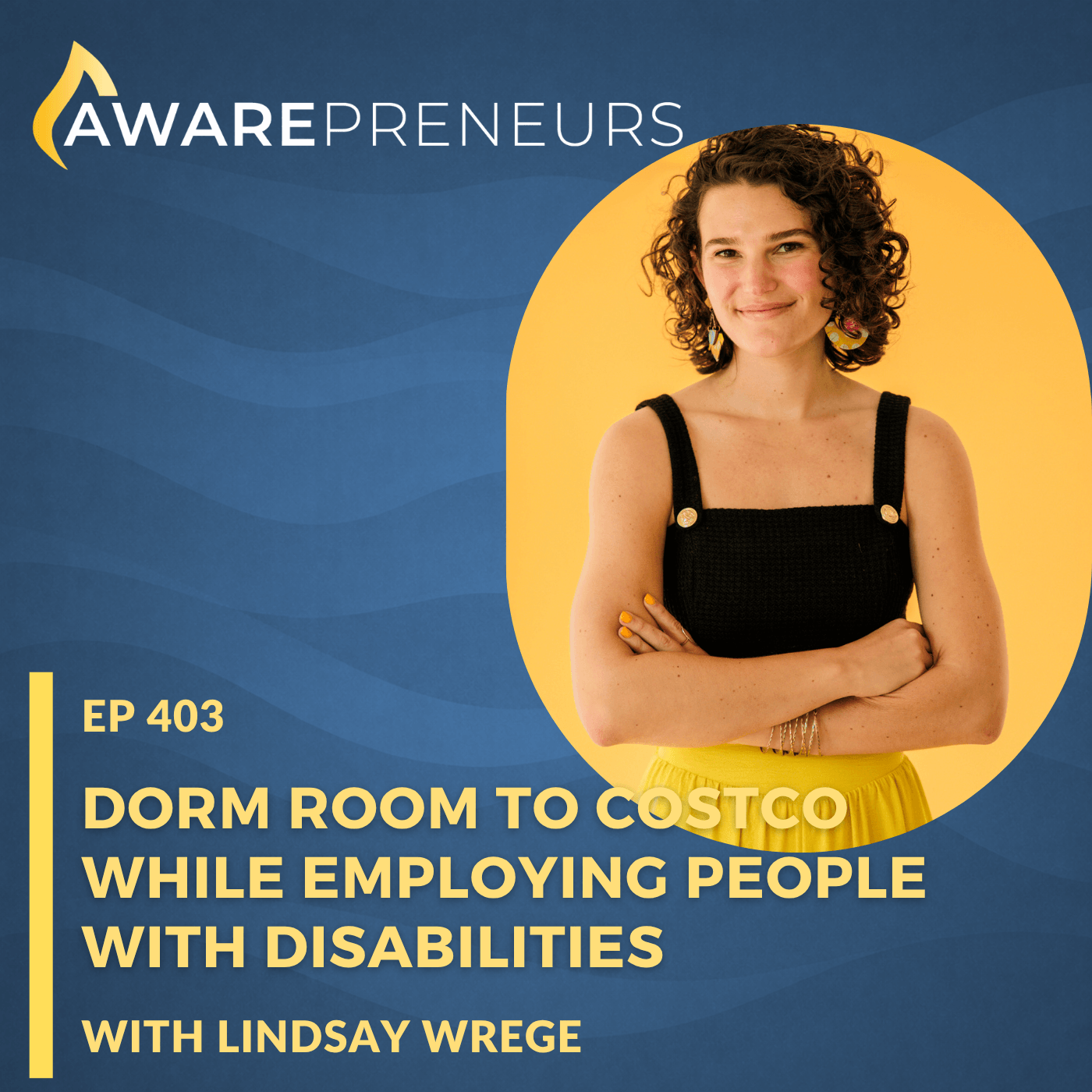
BIO: Lindsay Wrege is the co-founder and CEO of 321 Coffee, a coffee shop and roaster based in Raleigh, NC that employs individuals with intellectual and developmental disabilities. Her inclusive staff, featuring people with down syndrome, autism, and other forms of neurodiversity, together are modeling inclusion for others to follow. She started this company in her college dorm room, and it now has 5 locations and employs over 50 adults with IDD. Lindsay believes in the power of using business for social impact.
This episode is sponsored by the coaching company of the host, Paul Zelizer. Consider a Strategy Session if you can use support growing your impact business.
Resources mentioned in this episode include:
Time Stamped Overview of Lindsay Wrege, Founder of 321 Coffee, interview
Introduction & Background
Introduction to Awarepreneurs podcast and episode guests 00:02
Overview of 321 Coffee's mission and growth 00:28
Emphasis on using business for social impact 00:56
Origins of 321 Coffee
Inspiration from personal connections with individuals with disabilities 01:30
Observations of employment challenges for people with disabilities 02:04
Initial motivation to create more meaningful employment opportunities 02:36
Early team formation and enthusiasm at college 03:31
The lack of initial business experience and resources 03:55
The First Iteration & Launch
First version: folding table at student union 04:14
Procuring initial supplies and setting up with bootstrap resources 04:34
Reflection on humble beginnings and learning process 04:50
Growth Through Pop-Ups and Farmers Market
Pop-up events in various locations 05:55
Value of starting messy and iterating 06:14
Transition to a recurring presence at the Raleigh State Farmers Market 06:36
Logistics of storing and transporting supplies 07:58
Team Composition and Culture in Early Stages
Composition of the original team: college friends and disability community members 08:31
Role of co-founder Michael Evans and others 08:37
Community outreach through local organizations 10:05
Use of Sign Up Genius for scheduling and on-site training 10:31
Balancing Mission and Product Excellence
The importance of high-quality product alongside mission 11:14
Risks of relying solely on mission to attract repeat customers 11:51
Tackling stigma by demonstrating capability through quality 12:15
Embedding standards of excellence in operations, training, and values 12:31
Embedding Quality into Company Culture
Strategies for improving and measuring product quality 15:08
Gathering and implementing customer feedback 15:11
Communicating the importance of excellence and attention to detail 16:22
Role of core values in shaping behavior and decisions 16:58
Specific quality control practices (e.g., espresso standards) 17:12
Scaling Up: Locations, Staff, and Capital
Growth to 6 locations and 50 employees 18:48
Capital needs associated with physical and staffing expansion 18:55
Funding journey: from student org to 501c3 nonprofit then for-profit 19:33
Early fundraising via school resources, microgrants, and crowdfunding 19:40
Bootstrapping the first cafe location 21:04
Transition to roasting their own coffee 22:18
Evolution to a for-profit structure and raising capital via convertible note 23:08
Strategic partnerships and sponsorships with brands like Oatly and Lenovo 23:56
Creative Capital and Partnerships Strategy
Importance of strategic partnerships and sponsorships for social ventures 24:45
Underutilized opportunities for social entrepreneurs 24:59
Commentary on capital trends and access for impact-focused businesses 25:17
Examples of leveraging partnerships in other projects (e.g., New Mexico Tech Week) 25:52
Entry into Costco and Large-Scale Distribution
Journey to getting 321 Coffee into Costco 27:24
Process of outreach and networking to Costco buyers via LinkedIn and AI 28:30
Importance of having both mission and product excellence in impressing buyers 29:23
Logistics and scale of Costco’s initial order (16,000 lbs of coffee) 30:03
Comparison to previous scale and the operational challenge 31:15
Internal team mindset and culture around the challenge (“the great Costco clobbering”) 32:06
Team Culture and Recognition During Scaling Moments
All-hands-on-deck teamwork and split shifts 34:05
Creative recognition and reward (costume, pizza, celebrations) 34:48
Certificates and themed titles for team members 36:00
Integrating Mission & Operational Design at Scale
Maintaining employment and meaningful roles for people with disabilities in production 37:01
Designing accessible manufacturing systems 37:21
Operational proof: accessible systems facilitated scaling for Costco 37:52
Impact on Disability Employment Narrative & Business Success
321 Coffee as a demonstration that inclusive employment and business growth are compatible 38:34
Significance of being selected by Costco out of a highly competitive product landscape 39:09
Consumer validation through rapid product sellout at retail 39:46
Resulting ongoing relationship with Costco and effect on growth 40:13
Broader community and customer base contributing to mission impact 41:06
Closing Thoughts and Call to Action
Invitation to support 321 Coffee through purchasing or following on social media 41:45
Encouragement for listeners to share the episode and engage further with impact entrepreneurship resources 42:31
Key Takeaways in Lindsay Wrege of 321 Coffee Interview
Inclusion as a Core Business Model:
The conversation focused on how a commitment to meaningful inclusion—specifically employing individuals with intellectual and developmental disabilities—can create a vibrant business and spark broader social change.
"I think in general, my goal of 321 Coffee is to show that you can employ people with disabilities and run and grow a great business. You can create an excellent product and you don't have to choose between doing good and doing well. And I think this Costco rollout proves that incredibly." 39:34
Excellence and Quality Drive Mission Success:
A key theme that emerged was the necessity of prioritizing product excellence alongside a strong mission. The discussion explored how ensuring quality creates repeat customers, challenges stigma, and sustains growth for social enterprises.
"The worst thing that could happen at 321 is that someone comes, they pat themselves on the back because someone with Down syndrome just handed them a cup of coffee. It's gross. They dump it and they get themselves to the closest Starbucks, right? That is the worst-case scenario because there is a stigma that disability is often associated with less than. And it is so important that [we] demonstrate that that is not the case. And the way that we do that is by serving an excellent quality product." 12:14
Creative and Persistent Growth Strategies:
Several points were raised, including the power of starting small, leveraging community and partnerships, and persistently navigating capital and retail opportunities—even up to securing placement in Costco through cold outreach and adaptability.
"We found the name of the Costco coffee buyer on LinkedIn...and we just started emailing this guy and no response. That's okay. We sent another email, we sent another email...and eventually we heard back and he was like, 'Hey, this is cool. I'd love to try it.' ...His first question was, this is interesting, send me samples." 29:04