EP 090 Misinformation, Myths and Unpacking Unconscious Bias with Leesa Rene Hall
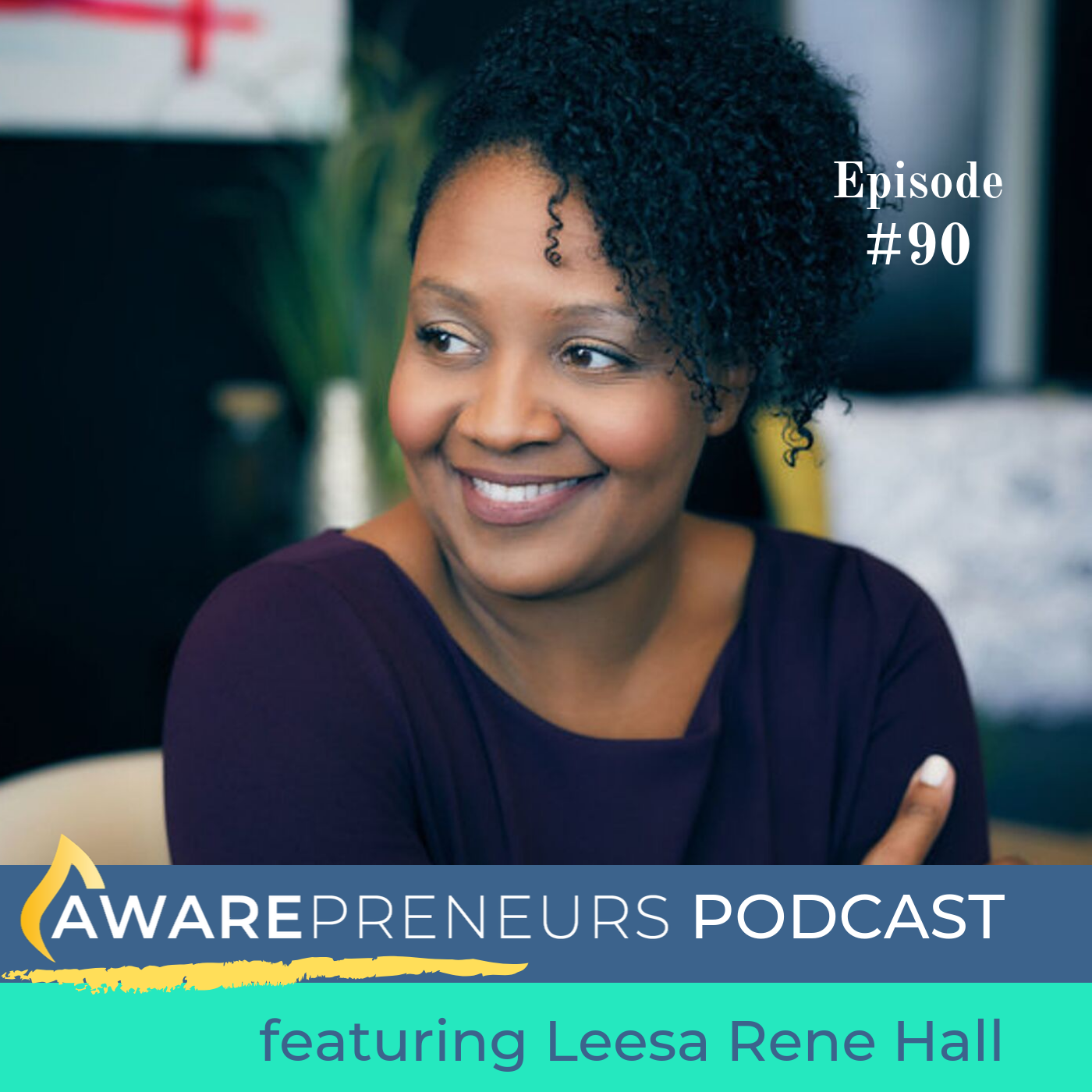
Our guest this week is Leesa Rene Hall. Leesa is an author, an anti-bias facilitator, and a social historian. She is the author of 10 books including her popular workbook Unpack Biases Now, which is designed to help leaders unpack their implicit biases so they can create truly inclusive communities.
Resources mentioned in this episode:
THE IMPERFECT SHOW NOTES
To help make this podcast more accessible to those who are hearing impaired or those who like to read rather than listen to podcasts, we’d love to offer polished show notes. However, Awarepreneurs is still a startup with limited resources. So we’re not there yet.
What we can offer now is these imperfect show notes via the Otter.ai service. The transcription is far from perfect. But hopefully it’s close enough - even with the errors - to give those who aren’t able or inclined to learn from audio interviews a way to participate.
Leesa Rene Hall Awarepreneurs Interview
SPEAKERS
Paul Zelizer, Leesa Renee Hall
Paul Zelizer 00:06
Hi, this is Paul Zelizer and welcome to another episode of the Awarepreneurs Podcast. This podcast is all about the intersection of three things, conscious business, social impact, and awareness practices. Each episode, I do a deep dive interview with a thought leader in this intersection. Someone who has market tested experience and is already transforming many lives. Before I introduce today's guest, and our topic today, I have one favor. If you could go over to iTunes or whatever app you're listening to the show on. Our guest today previously talked about algorithms and many times they can be harmful but they can also be really helpful. So when you go and you do a rating and review, it helps people find our show, helps our guests get their message out there help people find our community and not feel so alone. So many good things just by that simple act of putting a rating in a review. Thanks for considering. So today, I am thrilled to bring back to the show we don't have guests. Very often, I think only three times or this might be the fourth and almost two and a half years that we bring somebody back on the show, but today I am thrilled to welcome back to the show. Lisa Renee Hall. Our topic today is misinformation myths, and unpacking unconscious biases. Lisa Renee Hall is an author and anti bias facilitator and a social historian. She's the author of 10 books, including her popular workbook unpack biases now, which is designed to help leaders question their implicit biases so they can create truly inclusive teams. I also want to say I'm blessed to think of Lisa as a friend. This is more than just a professional colleague, who I think is awesome, which I do. But Lisa is just fabulous as a human being and as a deep spiritual practitioner. So Lisa, thanks so much for being on the show. Thank you for having me back, Paul. So we'd like to start every surely so with with a practice that helps you stay centered, really get into this new body of work. You're literally like traveling all over North America, bringing this work of unpacking all this really painful stuff in a beautiful, unique way, which I'm so thrilled to help our audience learn about but how do you stay centered when you're dealing with some of the people like the guy on my Facebook timeline, who is being a complete asshole and inadvertently sparked a revolution?
Paul Zelizer 02:41
You were you were absolutely genius with this guy who hadn't unpacked his biases, let's just say this because he still has and still hasn't, he still has not as far as we know and is a major leader in the conscious business world continues to teach at very high level thousands and thousands of people both online in person and he hasn't done his work and you were incredibly scuffle and patient with him. How do you do that? What helps you stay centered.
Leesa Renee Hall 03:10
So the place I come from is my, my daily sacred practice is writing expressively in the wee hours of the morning. So I rise before 5am. And now it's natural and without alarm. But that took quite a bit of time to do. And I grab and take care of my biology needs grab a cup of coffee, turn on my diffuser as it diffuses a blend that helps me focus, a blend of essential oils and I write expressively. And what that means is I write without any filters, I don't interrupt myself, I don't censor myself, I don't look back to correct spelling. I do that with keyboard and screen. And the purpose of that moment is isn't to write to be published or right to be seen. I'm not writing to be graded or judged. What I'm doing is I'm releasing from my soul through my words, messages that I'm hearing from the divine. And so that becomes a sacred that's my prayer. That's my meditation. When the words leave my body, it now I can see the chaos that was writing with residing within and I can see it on the page and start to make sense of it. And those messages that come out in those words is a visual representation of where the divine wants me to go and, and where to focus and because I protect that time of Morning, judiciously. It has helped me to to to, it's helped me to create loving boundaries, which then extend out to social media, which extends out to conversations. And I'm now better able to show up and let people know when and how I will engage.
Paul Zelizer 05:28
I remember you talking when this practice started it's it's both a deep spiritual practice for you and a form of activism. Yes, see a little bit about that, like your remember an image of somebody like a protest or holding their sign and you were writing incredibly eloquently like, you wouldn't find Lisa, necessarily a protest or not very common, but your form of protest and working toward social changes writing in this very, incredibly focused honest, and unpacking these lies or misinformation, I guess, is the buzzword. But these lies, let's call a thing a thing right have been incredibly harmful, and you go right into that complex terrain. And you have for years yourself and have now guided hundreds, even thousands of people on a deep path of unpacking all that with this writing practice talk a little bit about writing is activism.
Leesa Renee Hall 06:32
Yeah, and, and, and the activism, which comes out isn't necessarily the words that are written and that I share as an independent writer, whose writings are backed by hundreds and hundreds of patrons through Patreon, which is a an environment that you told me and strongly and lovingly encouraged me to, to get to know and launch a community on. So I thank you for that. But but the activism comes from being able to rise each morning and work on my economic agency, knowing that my ancestors could not. And so I'm descended from both the oppressed and the oppressors. I have, I have enslaved Africans as part of my, that interrupted my lineage. And I also have white Europeans, British and French, in my lineage as well. And they were the ones that held enslaved Africans in bondage. So part of writing helps me to, helps me to, to, to, to understand the nuance and and to and to interrogate the, the dichotomy between these two existences within my DNA. But also, I know that for my African ancestors who were enslaved, reading and writing was criminalized. And so being able to rise each morning to write words, is a way that I give homage to my ancestors who could not do this, because it was against the law for them to read and write. And as I write, I channel, my ancestors. And now it's, I'm the seventh generation removed from my slave owning ancestors, from so long ago, on the island of Jamaica, in the parish of St. Elizabeth, on a plantation called Green pond. And through writing, I've been able to find the courage to even face that the evils and the violence and the trauma in my family history. And by doing so, I rediscover those stories. And it gives me the courage to even take a look at those in my family tree who did the oppression. And so when I write the activism, for me, is the act of writing. And is the act of being able to express myself through a medium that was once criminalized just because of the color of one's skin.
Paul Zelizer 09:25
I should whine back a little bit I when I get excited, sometimes I get impatient or just like forget so just if you're new to the show, or you haven't heard, we've done a fabulous interview with Lisa that went into her whole previous career doing all these incredible things as a digital marketer and other incredible things. And I will put a link to the show notes. This particular episode is as you know, misinformation myths and unpacking unconscious bias and Lisas use of writing. I mean, you're useless. It has inspired me profoundly And like many of us, I've, I saw you in 2016 2017, you know, for obvious reasons being like, oh my gosh. And we each had our various responses of how we were gonna try to be scuffle or you know, pay attention or, you know, respond, given some of the things that have been happening around the world, particularly here in the US things are really, you know, intense, a lot of us who are in the conscious business, social impact world had some form of that holy shit, right? You took that into writing, I watched you take the heat, and you're like, at the time, I don't know, if it was quite as big where it was going to go, you just like, got up early and started writing about all these incredibly poignant moments you knew you needed to sort of tease apart or your word is unpack some of your history, like what you just referred to both of these lineage as the colonized and the colonizer and making it really personal and sort of writing about what happened to your family in the lineage in Jamaica, and how you got to Toronto, Canada, and what you were finding out and DNA tests and sharing all this in this way I never seen before, it was stunning. And you mentioned Patreon, we'll get to that a little bit in terms of the business model and how this all works. But suffice it to say, there are now hundreds of people around the world who are using your writing prompts and are supporting you in this journey. Because so many including me, one of them is paused, and a bunch of other entrepreneurs because we're just like, thank you for showing us how to the tagline of your website says the art of self inquiry and how to use this process of self inquiry to unpack some of these things that not unpacking them is leading to us as a culture being just absolute mess. Absolute. Like, did you have a reference point? Was that an internal? Like, I just don't know how to respond to this, I'm going to write was he like, where did this practice in quite this way? How is this born? Where did this come from?
Leesa Renee Hall 12:21
So I there were actually two moments. But the moment that prompted me to write before 5am, every morning and start to get this practice was I played, I played the organ. And I play the organ at a lot of funerals, I would say in over the past three, four years I've played hundreds of, or maybe dozens, dozens of funerals. And the last one I played at is me as an organist. I'm a passive observer, right? And I'm just there to play four or five hymns. And give me the check and I'm out the door. But this and I hear a lot of stories about the dearly departed. And people go up and talk about you know, Nana's banana bread. And you know, and there's laughter and, and all these these stories that those who are left behind tell of the dear dearly departed. But the one that stood out was when I played the funeral, or sorry, I played the organ at a funeral for a man, a young man who was killed while being a good Samaritan. And there's one thing I've learned being an organist at different funerals is that eventually I'll find out how the person passed away. There's no need to go to a family member and say, Well, how did your family remember? Eventually it will come up. And at this funerals 21 year old, young man and I was curious, you know, this is not normal for a person in their 20s just passed away. And so after hearing, you know, multiple people go up and talking about this young man, his father takes the microphone. And his father said a few words, and then all of a sudden shouted, he was murdered. They took them away from me. And the entire church fell silent. And I sat there because I've never out of all the funerals I've played. I've never heard such rage come out of a family member who is not there to commemorate the memory of the person who passed away. So caught my attention, of course, but there's something that the father said that prompted me to go and start writing each morning. And his father said this. He said, despite the fact that my son is gone, he left behind music and he said, I will spend the rest rest of my life, making sure his songs get out there.
Leesa Renee Hall 15:09
And Paul, I was just because what the Father was up there saying, remind me of a book that I read called die empty. In which the author remembers first name is Tim, I don't remember. But it was it the titles die empty. The author in that book encourages us to spend our life putting together emptying ourselves of the songs that we want to compose the books that we want to write the plays that we want to perform. But even if we are not able to produce or, or see our creative works, being celebrated in our lifetime, at least we can leave that behind for the next generation or state to enjoy. So once I sat there asked myself,
Leesa Renee Hall 15:54
if I were to pass, would I would I say would people say that she died empty. And so a few weeks later, I decided that, hey, you know, now's the time, I have a historical fiction stuck in my head. It's been there for seven years, I'm ready. And so I plotted out the outline of the book, I sat down at my computer, it was January 3 2017. I ripped myself out of bed on a cold winter morning in Toronto was dark outside, the sun won't come up for another three or three hours. And I sat there and I wrote the first chapter. And I did that every morning for 59, straight mornings, even on the weekends waking up before 5am, to write a chapter of this book.
Leesa Renee Hall 16:46
it wasn't until the 16th morning when I woke up, and I had a professional setback that I decided to write about that instead. And I felt a sense of cleansing. So the next morning after that, I kept writing about this professional setback. It took me about a week or two to drain myself of the disappointment and the hurt that I had. A little did I know, Paul is that the character that I needed to develop in that moment, was the character of Lisa. And that's what started the process of using expressive writing to interrogate them this information in my head.
Paul Zelizer 17:29
Nice. He started sharing those prompts that process, beautifully pointed where what what happens when we talk a little bit about but we go from a place of misinformation, Lisa, and start to just historical accuracy, right, getting underneath the myths, the lies, the misinformation, and we start to say, this is my best sense of what really happened here. Whether it's our childhood, or what happened in Jamaica, or my family or Ukrainian Jews, what happened in Eastern Europe when all that was going down, that led to my ancestors coming to Ellis Island, when we really start to tease apart and get a sense that why is that important?
Leesa Renee Hall 18:14
So one of the one of the moments for me was, as I when I when I started writing expressively about an attorney interrogating my own stuff. One of the things I decided to do was write a memoir about my years working in tech, as a, as a black woman with a liberal arts degree. Like I had all these strikes against me, right? The tech field is dominated by white men, and with computer and engineering degrees and everything but
Paul Zelizer 18:49
So I said, Okay, and I forgot to say podcasting is one of the ways that career path and you get it out in the podcasting. We're all the way back in the day, right
Leesa Renee Hall 18:57
Way back in the day. So what it was when it first came out, I was like one of the early adopters. I got my first book deal because I was like all over the place talking about podcasting and evangelizing about podcasting. And I got a lot of awards for being a woman in tech. And I just love that. I love the intention. I love being this anomaly, this outlier in the tech field, and I just loved it. And so when I decided to write my memoir about working in tech as a black woman with a liberal arts degree, well, every as I kept writing, I was just like, oh, who is this person? And as I kept writing the memories that came up as like, Oh my goodness, this woman's this person, his version of Lisa is just awful. I was so I was so hell bent on protecting my, my, my, I guess my legitimacy in the tech field that anyone that tried to challenge it, I would bulldoze them. I will I would do everything to ensure that they were the ones that suffered. And I would come out on top. And so as I dug deep into that, what the other revelation that came up for me was, I started to see my fears. And I start to see that how damaging it can be to have such an attachment on these manufactured identities. And it's one of the big things that comes out of this process. When my patrons start using the writing prompts to question everything that they've been told about their social and biological identities. It's that it's theirs. It's this awareness that we've attached ourselves to this profound lie, and that we are much more nuanced and layered and complex. In essence, what it does, it returns us to our humanity. And when we can see our own humanity, then we start to see the humanity and others, we start to look at others beyond their social and biological identities. And there's nothing more freeing than that. Nothing more liberating than that. Because then no one can hold over you the stereotypes, and the myths that are attached to the social and biological identities.
Paul Zelizer 21:30
I remember in this beautiful, complicated thing that went down on social media where this particular person is being a real, you know, is very abrupt and in His righteousness
Leesa Renee Hall 21:46
and gaslighting and returning to his racial superiority anytime. Ah, it was
Paul Zelizer 21:52
an out of that came this post that went completely viral. It was fat. I don't even remember how it was hundreds or thousands of times it got shared. It was what what to do and you've been accused. I fragility or rights, oppression, supremacy, right, is that the title is close.
Leesa Renee Hall 22:10
Yeah, it was close to that. Yeah.
Paul Zelizer 22:12
And do you remember how many times it was shared?
Leesa Renee Hall 22:14
Well, I when I push publish, I went to dinner and ran some errands. So it's about four hours. And when I came back, it had already been shared 1000 times. And it's just like, what's that in four hours, or hours.
Leesa Renee Hall 22:26
So usually, a blog post on my blog is shared 150 times in its lifetime. So to see 1000 in just four hours, and then climb to 5000 in the first week. And then it was 10,000. In the first month. It was just like
Paul Zelizer 22:42
wild. It was incredible. You really had your and from where I sit, it was cuz you were doing this work. It wasn't like you just decided to write this and like, hit Publish. You had been waking up at 5am. And in this incredibly poignant process of self inquiry and activism and unpacking your own biases and the misinformation that you got. And you're sharing that in a way that certainly I kept bowing to Lisa, Your Honor, they think goodness, there's a Lisa Rue de Hall in the world and, and there is something about that post going viral. And now I think you Is it fair to say you you plowed the soil, you made rich soil for that to happen. It's not linear. But they do have those 5am writing practices. We knew those people who care about you and saw you working your tail off to as a form of activism as a form. I don't know, I guess, to humanity, right?
Leesa Renee Hall 23:47
Exactly. And my intent was never to teach anyone anything, right? It was never. And that's something I had to unlearn. I had to unlearn that I'm here to save people. I'm here to fix people. I'm here to parent people. And this is something that that came up when I was an analyzing my my participation in the coaching industry. And so I knew that as a person who's highly sensitive as a person who has been a perpetual caregiver from the time I was young, because, you know, because of circumstances in my life, and and you know that I'm not here to teach anyone, I'm not here to parent, anyone. I'm not here to fix or save anyone. And so when I put that out there, I put out a bunch of questions to him. And I said, Listen, it sounds like you're really hurting about your identities, even though you're trying to deny mine when I'm trying to align with you. Yeah, he's like, I'm a poor white guy from wherever he's from. And I said, Well, I'm this Sunday's I guide you know, your whole foods, Whole Foods eating liberal, you know, less bizarre, it was
Paul Zelizer 24:51
so weird.
Leesa Renee Hall 24:53
So I said to him, listen, it sounds like you're upset and angry that your your white privilege isn't giving you the proof. that you want. So here's some questions right through them. And he totally dismissed it was like a virtual slap smack in my face. I said, Fine, if you're not gonna use them, I just slap them in a blog post and maybe, maybe 10 people
Paul Zelizer 25:16
5000 people in the first week later, I will find that post and put a link in the comments, right. But it was like a new body of or a new form of activism and working towards social change, something happened there, a light bulb went off for you and many other Whoa, she's on to something there. There's something happening there. That because,
Leesa Renee Hall 25:40
okay, and, and what was happening for me, and I didn't know what at the time is that this blog post, truly aligned with an aspect of myself that I tried to deny for so long, that because I am black. And because I'm a woman, and because I'm of Jamaican descent, and Jamaicans can be loud and boisterous that, you know, my highly sensitive, introverted side where I'm quiet and reserved, and I think a lot, that's I rejected that part of me. And yet, and so through this process of investigating and interrogating myself, I come to accept that this is who I am, that I can be soft, I can be quiet, I can be gentle, because that's my personality. And I can offer that as a gift to the world as a way in which we can do activism. And there's nothing wrong with me, or you, if you prefer that style of activism. So the blog post going viral wasn't just a chance to, or it wasn't just sharing these, this a new way of doing this, this, this this unpacking and challenging the misinformation in one's mind. But it was also confirmation to me that I can show up as I am. And for those who it aligns with, that, they will accept it and run with it. And for those who don't, that's okay, I let you go. But this is who Lisa is. I am highly sensitive, I am introverted. I do not like loud protests, I get hangry I get overwhelmed with all the noise, a sunshine, that there has to be a different way. And it's okay if I want to do it a different way. That's more aligns with who I am as a person.
Paul Zelizer 27:42
Plus, this, I'm going to do just a quick break and thank our sponsor, and we're not like most podcasts, most podcasts, it's like, you know, some meal delivery plan or like Squarespace or something like that. We don't have one or two or three sponsors, we have hundreds. It's called the aware of printers, community, fabulous people. And if Remember, this is patrons, who are helping each other, figure out how to grow businesses like these, whether it's helping somebody find how they can get their message out through podcasts, we have a number of podcast hosts, we you know, somebody's like, Hey, I got a book or program, or we're gonna do we do community calls once a month, into September, we're doing a community call by a fabulous lawyer, about how to take care of yourself legally, you're doing this kind of really powerful world changing work, and you're on the web, people could be seeing it from literally dozens of states and hundreds of countries all around the world. Each one is a different legal jurisdiction with its own laws and regulations. It's complicated. And Heather Campbell, who's an entrepreneurs community member is going to get together with us and help us think about taking care of ourselves legally. Branding experts who get deep and sacred and social activist brands and Facebook ads, people all in community helping each other grow our businesses at the most affordable rate I could ever possibly figure out how to do literally start to $5 if your per month if you're a new business, or your social entrepreneur from a country that's still developing, so go check it out. It's called the where printers community and you can find out more aware printers.com forward slash community so we are literally a community based and supported event. So thank you, everybody. This body of work was born they say you hit Publish 5000 people in the first week and they're a bunch of lightbulbs, I think including in your head. Whoa, okay, this is a thing. All right, let's, what what what happens after that? You started, you got on Patreon, right? Or and you started publishing these prompts. Right? Well, we'll talk about Patreon but let's talk about the prompts. Give people Just a sense of the body of the work, like what's an example of some of the prompts that you're writing yourself and also starting now as this community was growing that you were offering to people who wanted to learn about unpacking their own unconscious bias.
Leesa Renee Hall 30:15
So the prompts are grouped into four general areas. And so one of them is helping to unpack family and ancestry bias. So there are prompts that cover fatherlessness. So what does it What does it mean to have an emotionally and or physically absent? Father, there's one on mother, a mom, you know, many of us our very first, our deepest relationship will be with our mothers. And so healing that helps us to heal a lot of the misinformation we have around ourselves as women as men. And as we seek to parent our own children. So that's one area. The second area of palms, which is the biggest is around boundaries and productivity. What are the biases that we have around that? So there are writing prompts around sleep? And what does it mean to have a good night's sleep? And what does it mean, if you have class, race, gender, marginalization, in coupled with sleep patterns, and so that's an interesting thing. being picky is another one that we cover. And why when is it good to have pickiness? One of my favorites is one called battling perfection. And it's the one that I encourage patrons to start with when they join the community. Or, depending on when this is published, the prompts will then be in a workbook. And so battling perfection is key because a whole culture of white supremacy rests on perfection. It oppresses people of color and racialized people as much as white people. Because a culture of white supremacy says that perfection looks like this, it looks like this body type, it looks like this God that you worship, it looks like this place where you live and this amount of money. And so if you don't fall within those levels of perfection, then you not only oppress yourselves, but then you start to oppress others. So that's second area, third areas around power and privilege, biases that we have around that. And one of the first one of one of the prompts that I encourage patrons to work through, is the one around black woman leadership. Because I am a black woman, you are entering a space where me as a black woman, I have boundaries, and I have ways in which to work with the prompts. And so you need to handle your anti blackness, and question that, what does it mean to be led by a black woman? What does it mean to give money to a black woman. And so that's one of the prompts. There's also prompts around Islamophobia, body, image issues, beauty. And then the last area of prompts is biases that we may have around sustainability and the environment. And so one of my favorites is the one called wisdom of trees. So that's a fun one where you go out into nature and sit amongst the trees. And there's some questions that you can use to prompt you as you write around your awareness and experience sitting amongst the trees. And so that's the way the prompts are grouped. There are 52 in total, and they were published weekly inside the community on Patreon. And patrons work through that. So yeah, it's fun. It's fun. And it's also very, you know, there's some very deep moments. I mean, confronting your shadow in the darkness within is isn't fun. But to do so means that we gain a better understanding of ourselves.
Paul Zelizer 34:04
So there's these 52 prompts. So it wasn't like you wrote the book. And then like, here's the whole, but you started publishing them one of the time and people went deep. Gosh, I've never seen anybody on Patreon have such thoughtful and caring and vulnerable comments on their Patreon posts. It's just it's stunning. how willing people are to go into what they're unpacking. And this started to build right. Like it What is it now? Hundreds of people? Yeah, I don't even know what the I don't remember what how many hundreds, but like hundreds and hundreds of people have joined this community that said yes, like I want to learn how to use writing as a tool to unpack my biases and be a better leader. Right. And so yeah, Spent a better part of a year more than a year coming up with these 52. They'll go into a book or workbook it's called unpack biases now. So they just from an entrepreneur perspective, one of the people, one of the things people comment most about entrepreneurs that they love our guests, they think our guests are two fabulous things like you're just doing fabulous work. And then they love that I say, Okay, how does this all translate into a social enterprise? How does it work as a business lease? So talk to us a little bit, there's a new thing coming that that we're going to talk about just a second, a tour about this word called unpack bias now, but before we do that, just like, how are these prompts and the Patreon and other things that you're doing around the self inquiry for unpacking misinformation, myths and biases? Like how does it work as a business?
Leesa Renee Hall 35:54
Yes. So how does it work? So how does it work? As a business, I'm going to answer that,
Paul Zelizer 36:00
like revenue streams, how did we find you that kind of stuff?
Leesa Renee Hall 36:04
Okay. And, and one of the things I had to unlearn, which was part of the unpacking is I had to unlearn other people's version of success.
Leesa Renee Hall 36:16
I think I told you that there were two voices, which emerged, right before I launched on Patreon. There was your voice saying, Lisa, you got to do this you got to do because when the when the blog post went viral, people were sending me money to my paypal. And I'm like,
Paul Zelizer 36:31
don't just get paid one get paid every month. Lisa, like
Leesa Renee Hall 36:35
I said to him, I remember send you a message as Paul, why are people doing this? Well, like I didn't like because I, you know, I come from a place where my words weren't treated like currency. Hmm. I put things out there as a launch coach, as a business coach. And you know, it was a struggle to get people. And now here's a blog post that goes viral, and people just like some of your paper. So about 1500 dollars came in in three days. And I sent you a message and Paul, my goodness, what, what's happening? And you said to me, wouldn't it be nice to get that every month? And it's like, yeah, and so that's where my, my, you know, the urgency to launch on Patreon came from, but another voice emerged too. And this was supposedly a good friend of mine, who is also a business coach. And her words to me was, patrons can do nothing for you. And she's someone she's a voice that I trusted, a person that I adored. I mean, we're no longer friends today, but and so there are two voices or as Paul's, you're saying to me, get on Patreon, get on Patreon, please get on Patreon. And another voice that said, it's not going to do anything for you. And so a big part of taking that leap into launching the community on Patreon is because I had unlearned other people's version of success. And so in the first few months, you know, I was posting stuff on Facebook, I launched on Patreon I just continued to when I was doing posting things on on Facebook at the time, and people were commenting, and then I would invite them to join me on Patreon because I had an expressive writing prompt coming out that would address this will help you work through your biases. And the the so but but then I've also felt this pressure to keep producing, you know, winning content that will go viral. was another pressure that I put on myself. It's like I have one blog post go viral. Now everything that I write has to go viral. So I had to unlearn that as well. But it was around it was probably a month after I launched on Patreon. I had 30 patrons at that point. And I think it was pulling in a couple hundred dollars. And I said to myself, I'm gonna give this a year. And I'm really at rock bottom anyways, so financially. So I'm going to give myself a year on Patreon. And if I don't have 350 patrons, within a year, then I'll do something else. So it was a month after I launched on Patreon 38 patrons. And I wrote a post about doing a reaction fast that I no longer click the reaction buttons on any posts on Facebook. And that post went viral. A couple thousand shares on Facebook alone and you know, few hundred comments. And so I said okay, I'm going to do a 10 day reaction fast inside my community on Patreon, please join me and in that shot up the number of patrons I think it doubled or tripled. And then a few months later, I wrote these letters about their descendants of the colonizer. So really what I was doing was I was continuing to write but now I was writing to share, you know information about white supremacy and white privilege and white fragility. And those posts kept getting traction. And then from that, I would invite people into my community on Patreon. Because here's the writing prompt that can help you unpack that. Here's the writing prompt that can help you unpack that. So I reached 350 Patreon Patrons six months after launch, rather than and so I said, Okay,
Paul Zelizer 40:22
Well, I'm gonna keep going here. I guess this is the thing right? Now, I'm so inspired and happy for you. So, at a certain point in this work, right, people, hundreds of people are writing and they're sharing this incredible richness a certain point, he said, that your community approached us at least I don't want to just like do writing prompt after write, I want to put this into action. And you start training people about how they can take these prompts and introduce this practice to others. Tell us about that.
Leesa Renee Hall 40:58
So it was one of my first I have, I have my, my hall of fame, I call it like the first 50 patrons and, and, Paul, you were the second patron to join my community.
Paul Zelizer 41:12
I wish I was first. I was too slow with the button. Dang.
Leesa Renee Hall 41:18
But one of my first 50 patrons, her name is onika Coleman, who is to watch her healing. And oh, it was just beautiful. She came to me about a year after I launched on Patreon, and it said, you know, Lisa, I do corporate training, and I do a lot of wellness, you know, I'd love to use your prompts in the setting. And she said, I'll pay whatever you want. But I want to use them, can you give me permission to do so. And so at the time, I was just I was I'm just loving, you know, releasing a prompt each week growing the community using content that I share on social media, you know, I'm enjoying this, but I'm also feeling a sense of restlessness.
42:02
Like, there's something bigger,
Leesa Renee Hall 42:04
but I'm not even sure what it is like, I didn't put plans in place where I want to do a three, you know, one week, a, you know, wellness summit,
Paul Zelizer 42:12
we didn't have a sales funnel in place, Lisa?
Leesa Renee Hall 42:17
I don't. And that was part of the unpacking as well was to unpack all that training that I got, because I come from that tradition where you have to have a sales funnel, you have to have a target money, you have
Paul Zelizer 42:27
to know what with yourself,
Leesa Renee Hall 42:28
you know, on all these systems interacting with each other, and, you know, spending thousands of dollars a month can systems and only getting $10 off my ebook, you know, it's just, I don't learn all that unpack all that. So. So at first, I brushed her off and said, I was like onika Yeah, you know, that's interesting. But then I got two more requests within the same week. And so when I saw that I was just in these, these three people are not connected to each other. And so I said, there must be something here. So I put together an application form, because I know what type of person I want to use these prompts, because it can't just be anyone, because people are still coming. You know, people sit in my bi facilitated sessions. And you know, they'll be there three hours, they're excited. They're like, Lisa, I want to do this too. And yet, they have you know, three hours in a classroom once a week, what was that one time cannot unpack generations of unconscious bias. And so it was important for me to choose the right people, at least for the beta program, the first time I'm doing it, so I put out an application to my patrons. And I said to them, Listen, I'm only allowing patrons to apply because you have been going through the exercise of unpacking your unconscious bias using the prompts. And so I think a dozen people applied and out of the dozen and narrowed down the list to eight, I interviewed seven and then I chose five
Paul Zelizer 44:05
nice so you have at this point you have in the process, you have hundreds of people going through the prompts and supporting you on Patreon that's the exchange there and I have a number of people who are training to be facilitators at a nice rate rate is not outrageous in any way but it's you can go find it on this site if you want to understand what some of this means financially. And now we've got things like a workbook coming out and this tour that I am super excited about I mean to the point that we're printers is a promotional sponsor which we I don't think I've ever done before but but this body is like people keep coming like showing up on the radar it's a little bit like it is I don't have this like big plan for where printers I just go find people who are doing fucking awesome work and amplify it. That's my job. That's why I'm on planet Earth right now. So it's like you're you right like my My answer like to if I was at that if it was a my funeral, and people say, Did he die empty? Look at the our printers, podcasts and the conversations we're having. And that's where my heat is going into conversations and amplifying these incredible people like yourself. So we're super excited to help you get the word out about it. Tell us about the tour.
Leesa Renee Hall 45:23
I was, I've been, again, restlessness, right setting in that. Yeah. And part of that restlessness is that we've been working together as a community of patrons for since October 2017. And I'm getting a sense that there's more wanted and desired. And of course, with the facilitators in place, we did the training virtually, but they're still not sure how I actually do the physical facilitated sessions. So I said to myself, okay, you know, I want to and this is gonna sound really weird, I want to get into a room with patrons, I want to touch them, I want to smell their hair, I, you know, I want to see, you know, the lines show up on their face when they smile I like, you know, there's something magical that happens in a room. And I had been hired a few times to facilitate the process of unpacking in rooms for different companies and corporations. So I said, Well, why not? You know, first of all, I get to go from city to city to city and, you know, be on it and be in a room with my patrons helping them to unpack, I had gone to a few events, Paul, and I saw how I'm sitting there in the room with this expertise that could help what was happening in the room. And instead of me being able to share that tool of unpacking unconscious biases, I'm sitting there as an attendee watching the room fall apart, when in fact, I have the solution to what's happening in the room. And so it was just like, I was just feel. So I went to an event, a three day event. And as I sat there, I was witnessing this falling like this, you know, people trying to regain the racial superiority and the march nice people shooting themselves, and I was just like, this is a disaster. And as I sat there, someone from the weapons group, she was there volunteering, and she came over to me at the break, and I sat there and, and Paul, I couldn't even move the break, because I could see what was happening. I had the tool to be able to hear what's happening in the room, so that we can, you know, stop this, the violence that was happening through the microaggressions, and all that. And so she came over to me, and she said, Lisa, she goes, she said to me, You must be feeling you must be feeling so out of place. Because you have exactly what this room needs. And it wasn't just the cadence in her voice made me want to erupt in tears. And I looked at her and I just I said, I just nodded my head. And I vowed at that point, Paul, that I'm never going to sit in a room. When I have something that can heal the room. It was at that point, I made the commitment to do this tour. And my highly sensitive, introverted self, I'm nervous
Paul Zelizer 48:30
to get on a plane and go to New York City, or all these big cities, right, all these big
Leesa Renee Hall 48:35
cities, but the response has been overwhelming. It's been amazing. It's just like this is what patrons and their guests and their colleagues, this is what they want. So when I'm seeing the rooms filling and knowing that we're going to do some really deep and important work, to help get us ready. As you know, a lot of people in my community are also highly sensitive and introverted. And so it's preparing us for what's coming up. It's preparing us for what's going to happen in our local communities. We have elections happening in our countries where it's not the best option that's being placed in front of us. And yet we still have to persist, because we live in these democracies. And so how do we do so knowing that we're highly sensitive, introverted, empathic clairvoyant, and we're being damaged, you know, energetically by all this bullying and gaslighting that we're seeing of our political leaders. So if I can bring this tool and we can sit in a room and and begin to heal ourselves, then what kind of leaders do we emerge? It will kind of leaders come out of this process, and how can we help heal our local communities so that they become better and then collectively, we can then start to have an impact on In our world. So that's what this little little tour is going to do in each city.
Paul Zelizer 50:08
And what's it like? Like, if I'm sitting in the room? It's like, two days, two and a half days and each city is that right?
Leesa Renee Hall 50:14
It's a full day in Boulder. Okay, that's right. So in the morning, what we'll do is we'll do unpacking, we'll unpack and my facilitator, some of the cities have been chosen, specifically, because my facilitator will be co facilitating with me. And so in the morning, we will unpack, we'll go through that experience. I know what's going to show up in the room, because I've done this several times. But it's one of the reasons why I've purposely not done in a whites only space and and people of color, racialized people space, I want us all together. Because I want us to experience what it's like to be in a room when the community guidelines is no fixing, no intellectualizing and a skilled facilitator being able to spot when those things are happening. And I mean, maybe it's, you know, maybe it's my optimism bias, but I believe that we can come together. And if we're aware of the microaggressions of tokenism, that the privilege that shows up in the room, whether it's skin color, privilege, sexual orientation, privilege, religious privilege, then somehow we can be better at being better leaders. And then in the afternoon, that's what we'll do, we will start to will break out to smaller groups, and ask ourselves, what are the needs in our local community? And how can we come together as a group who will be here left behind when Lisa goes back to Toronto? And how can we be an effective force for the needs in our local community without this without those saver ism, without the entitlement without the innocent, in it without the parenting? So that will be the full day.
Paul Zelizer 52:03
And it's quite affordable for the day. So go take a look, we'll put a link here but remind us the so what's the URL that somebody can find out more information,
Leesa Renee Hall 52:12
head on over to www.za, unpack tor.com, that the unpack tor.com
Paul Zelizer 52:21
Make sure to put a link to that. They see you, they completely reinvented yourself, give birth to a new practice and movement of hundreds of people around the world are using that practice to unpack their unconscious bias. You're training people to use this with others, and now you're helping organize local communities all in the space. October 2017 is sort of a landmark time for you. It's not quite yet, October 2019. So in less than two years, you feel like completely reinvented yourself and given birth to a new form of activism and a new form of organizing. As an introvert, getting up at 5am in the morning, just writing. But what a beautiful. Wow, what when you look ahead, like but there's a tour, is there anything else on your radar that you're sort of feeling into what this work around addressing misinformation and myths and helping people unpack unconscious bias? Like any sense of what might come next?
Leesa Renee Hall 53:27
Yes, yes, I am. Very, it's funny, you know, you know, 2520 years after graduating with a degree in history, I had no idea why, you know, I don't think I've ever used my history degree to any degree. And now here I am, I was like, wow, everything I learned as I was pursuing my history degrees now now relevant today. The and has been relevant as I looked back at my experience, whether I was working as a print, a freelance print journalist, a media analyst, I went into tech and and and you helped me Paul in pinpointing the thread that ties all these experiences together cuz I couldn't see it. And what I do as a historian research, questioning the curiosity and and try like when I'm when I'm putting together my family tree, I have to analyze so much pieces of information. Because Elizabeth Ellis that was born during this year on this part of the island of Jamaica may not be my Elizabeth Ellis, my great great grandmother. And so there's a lot of inquiry that needs to be put in but also the research, which is the toughest part, because it takes patience again, something I've had to unpack this, this need to rush and get things done quickly go quickly, and now slowing down and being patient with the process. So I mentioned that because where I see Work taking me is that unconscious on the unpacked biases now work will remain. And in addition to that, is this work around analyzing, it's using sound research, questioning practices, in order to combat misinformation that's out there. You know, I almost see like a team of secret people who join my community, and we're secretly in the background, combing through pieces of information to then present to the world, hey, look, you know, someone said this, but this is what our research does. And being able to, I don't know, a squad of some sort, and we come together. And this is what we do in our secret layers, which really is just our computers in our individual location, but, and doing all that, as part of my work in producing a docu series, looking at the different ways in which my ancestors were contributors to major historical events in Jamaica, Canada and the United States. And so yeah, so marrying that marrying that love of research and, and discovery with, with also disarming this information and bringing that those two interests together.
Paul Zelizer 56:21
We thought I could hang out with you all day and talk all these different, there's so many layers. So many, but I want to be respectful of your time and our listeners time. If there was one thing you were hoping we would get to on today's dialogue, and we haven't touched on it yet. Oh, would it be.
Leesa Renee Hall 56:42
One of the things I learned through this process is that there's nothing more revealing than becoming naked with yourself. And before we can love and light the world,
Leesa Renee Hall 57:06B
before we can approach people and and say such damaging things like your thoughts make becoming reality. I believe that often people say that because they're so afraid of sitting with themselves. And so, in all this, I learned that becoming naked with ourselves, confronting what's deep in our souls, questioning and interrogating why we believe what we believe, is the most liberating, liberating thing can do for us.
Paul Zelizer 57:49
Thank you so much for being on the show, giving birth to this incredible work and helping me literally thousands of others find a way to take it out of the realm of the intellectual, here's what I should know about our unconscious bias, or here's what my left brains that really just uncork it in ourselves and in our DNA, your leadership and that process to deep deep out for me and many others that I know for stepping into this work so courageously and showing us a path forward in a place that feels pretty tangled right now to a lot of us.
Leesa Renee Hall 58:31
Thank you, Paul. And, again, thank you for inviting me to be here to share this part of my journey. So go check out that
Paul Zelizer 58:41
unpack Unconscious Bias Now tour. Like I said, we've never done this before, but I could not do it. Go take a look. And you'll see why what's happening there. Both the practice the depth, the commitment to social change, and the community focus. It's just such a beautiful sync up of values here. So can't encourage you enough to get to one of the events on the tour. So I want to say thank you to the printers community who allows this to happen. It's your support and you're just leadership people are out there telling the world about our printers on a regular basis almost every day I wake up today we had seven people who submitted to be on the were printers podcast, the words going out there and it's thanks to you all. If you have a venture in this intersection of growing a business that can support you and your goals and help your family that well and has a sense of really making the world a better place. Good check out the aware printers community. help with a website help with some languaging for sales page your way just like Lisa found her way, your way of doing the work not some you know, colonizer Dominator single bottom line has to be a sales funnel like we're a community of people who are reinventing what business looks like with a commitment that we're actually able to pay their bills in a way to live a comfortable life in these very chaotic times. Go check it out our printers.com forward slash community. So for now, I want to say thank you for the good work you do and all the positive impact that you're having.
What is Awarepreneurs?
Awarepreneurs is a popular conscious business and social entrepreneur podcast and community. You can find out more about us at Awarepreneurs.com.